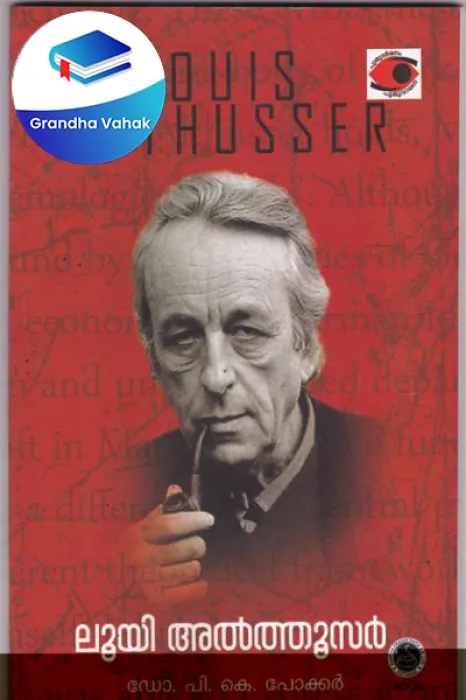
Louis Althusser by Louie Althoosor
GV - L2
Category
Non-Fiction
Sub
Literature
Language
Malayalam
Available for Borrowing
Quick Look:
MLNFLI-LouAlt-001
Louis Pierre Althusser (UK: /ˌæltʊˈsɛər/, US: /ˌɑːltuːˈsɛər/; French: [altysɛʁ]; 16 October 1918 – 22 October 1990) was a French Marxist philosopher who studied at the École normale supérieure in Paris, where he eventually became Professor of Philosophy. His notable works include For Marx (1965), Reading Capital (1965), and the influential essay “Ideology and Ideological State Apparatuses” (1970).
Althusser’s ideas and critiques centered around the theoretical foundations of Marxism. He addressed challenges posed by empiricism, humanist and reformist socialist orientations, and the cult of personality and ideology within European communist parties. Although often associated with structural Marxism, Althusser’s relationship with other French structuralist schools was complex, and he later described himself as a social anarchist.
His life was marked by periods of intense mental illness. In 1980, he tragically killed his wife, sociologist Hélène Rytmann, by strangling her. Due to insanity, he was declared unfit to stand trial and spent three years in a psychiatric hospital. Althusser’s academic output diminished, and he passed away in 1990.
Althusser’s work continues to influence thinkers such as Judith Butler, Ernesto Laclau, and Slavoj Žižek. His exploration of ideology and state apparatuses remains relevant in contemporary discussions.
Louis Pierre Althusser (UK: /ˌæltʊˈsɛər/, US: /ˌɑːltuːˈsɛər/; French: [altysɛʁ]; 16 October 1918 – 22 October 1990) was a French Marxist philosopher who studied at the École normale supérieure in Paris, where he eventually became Professor of Philosophy. His notable works include For Marx (1965), Reading Capital (1965), and the influential essay “Ideology and Ideological State Apparatuses” (1970).
Althusser’s ideas and critiques centered around the theoretical foundations of Marxism. He addressed challenges posed by empiricism, humanist and reformist socialist orientations, and the cult of personality and ideology within European communist parties. Although often associated with structural Marxism, Althusser’s relationship with other French structuralist schools was complex, and he later described himself as a social anarchist.
His life was marked by periods of intense mental illness. In 1980, he tragically killed his wife, sociologist Hélène Rytmann, by strangling her. Due to insanity, he was declared unfit to stand trial and spent three years in a psychiatric hospital. Althusser’s academic output diminished, and he passed away in 1990.
Althusser’s work continues to influence thinkers such as Judith Butler, Ernesto Laclau, and Slavoj Žižek. His exploration of ideology and state apparatuses remains relevant in contemporary discussions.